Electrodeionization (EDI) Systems
With the increasing sophistication of industrial processes, power generation, and the rise of the hydrogen production industry, there is a growing demand for processes capable of producing pure and ultrapure water.
Achieving this continuously, with low maintenance and minimal chemical consumption, is essential. For this reason, at I’mWATER we design and manufacture compact, customized systems that meet the specific requirements and optimal conditions of each case, with electrodeionization technology being the most refined and best suited to current needs.
Electrodeionization (EDI) is an advanced water treatment technology used to produce high-purity water from high-quality feed water by removing dissolved ions. This system combines selective membranes, ion exchange resins, and electrical current to achieve deep demineralization without the need for chemical dosing or constant chemical regeneration.
EDI is typically used as a final polishing step in water treatment systems, especially after reverse osmosis (RO) processes. Thanks to this technological combination, it is possible to obtain ultrapure water with extremely low conductivity and highly stable quality, starting from virtually any clean water source.
The operating principle of EDI is characterized by:
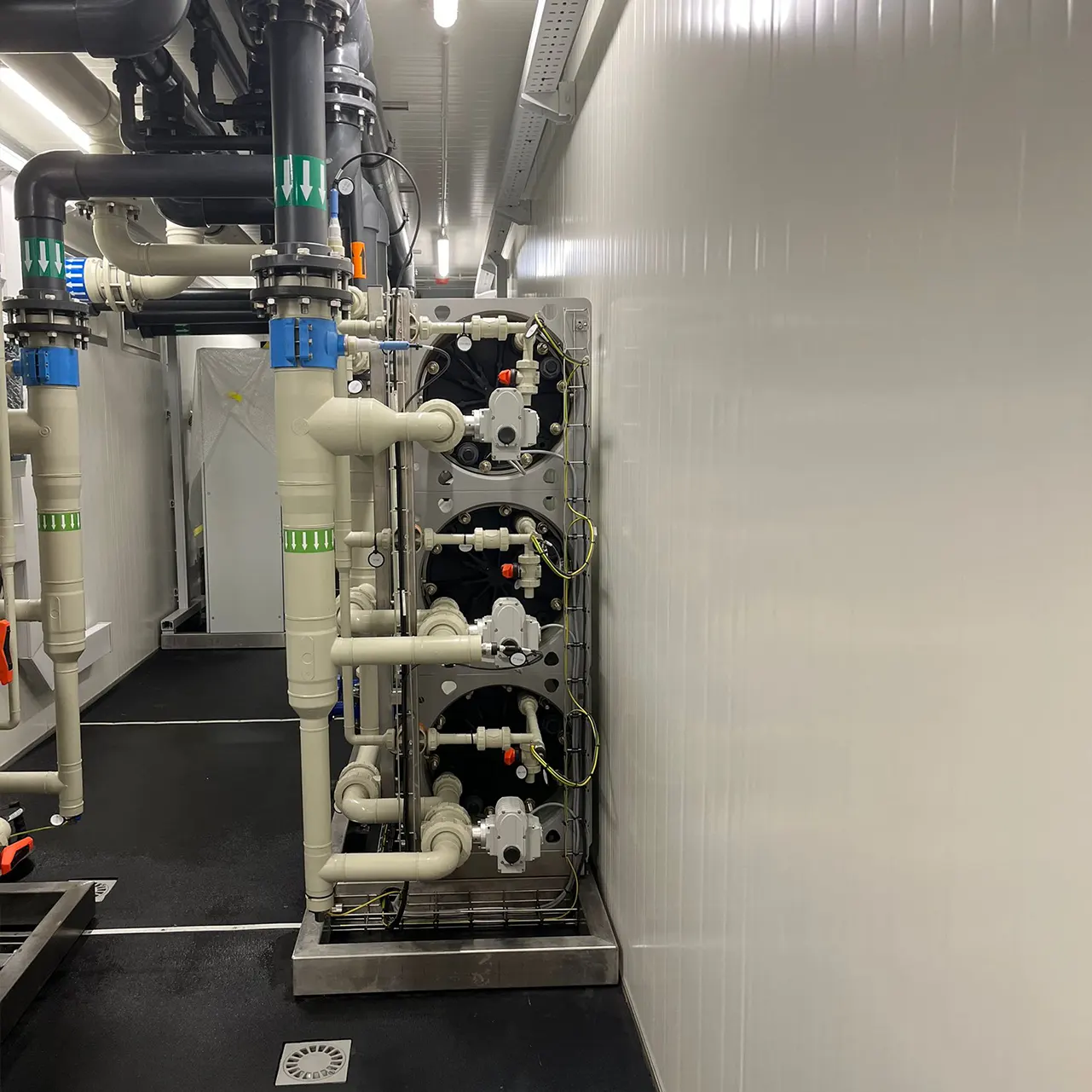
It consists of modules made up of compartments separated by alternating cation- and anion-exchange membranes, which contain ion exchange resins that facilitate the movement of ions present in the feed water.
When water passes through the EDI module, a direct electric current is applied between the electrodes, generating an electric field that causes the ions to migrate toward the corresponding electrode according to their charge.
During this process, the ions pass through the respective selective membranes (anions pass through anion-selective membranes, while cations pass through cation-selective ones). This causes the ions to concentrate in designated alternating channels, which form the reject stream, while ultrapure product water is obtained in the remaining channels.
At the same time, the electric current causes water dissociation, producing hydrogen ions (H⁺) and hydroxyl groups (OH⁻), which continuously regenerate the ion exchange resins. Thanks to this internal regeneration, EDI can operate continuously without the need for chemical products.
To ensure optimal performance, EDI systems must be supplied with high-quality water that has been pretreated through desalination processes such as reverse osmosis.
This pretreatment reduces the concentration of salts, suspended solids, and organic matter that could affect system performance, providing water in optimal conditions for EDI treatment.
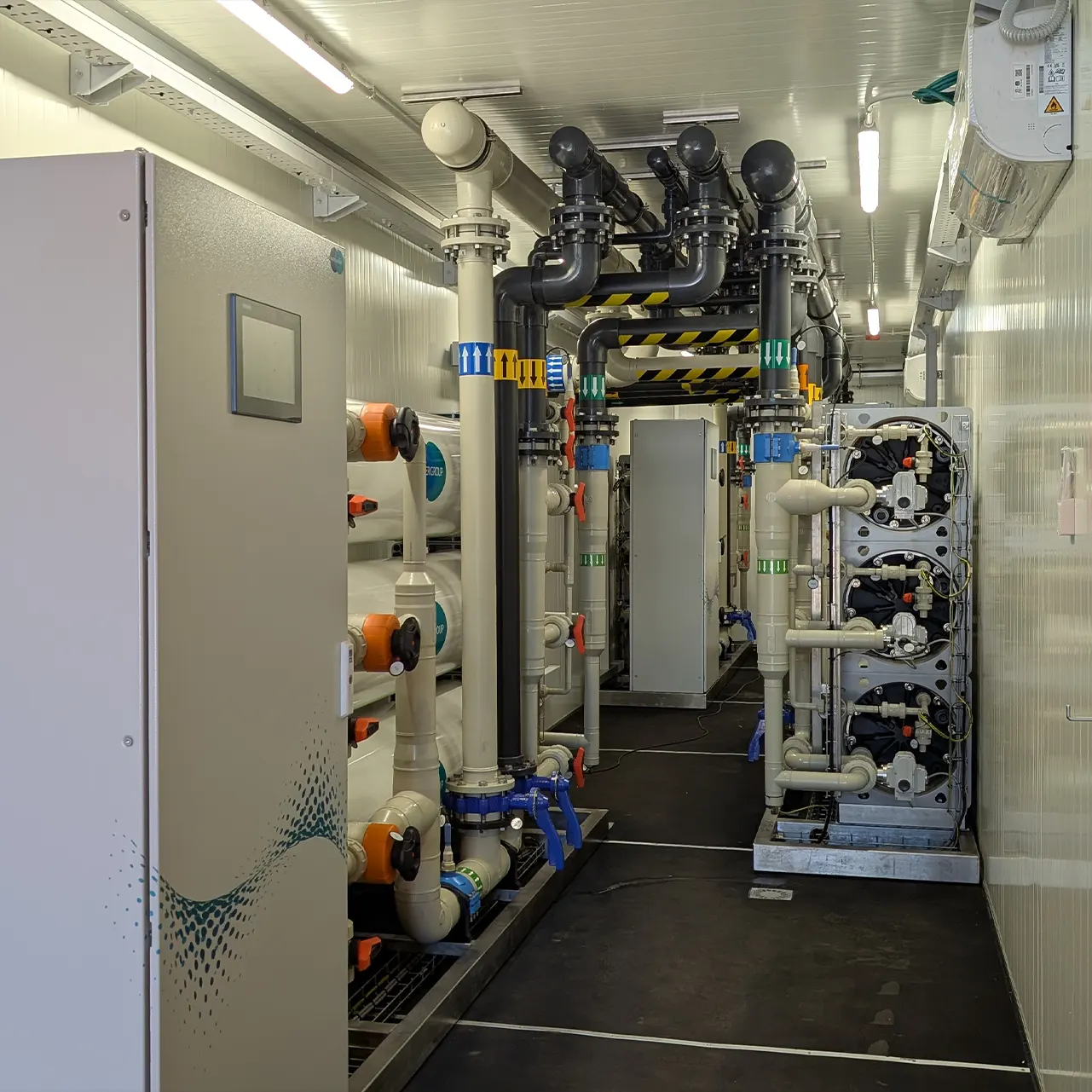
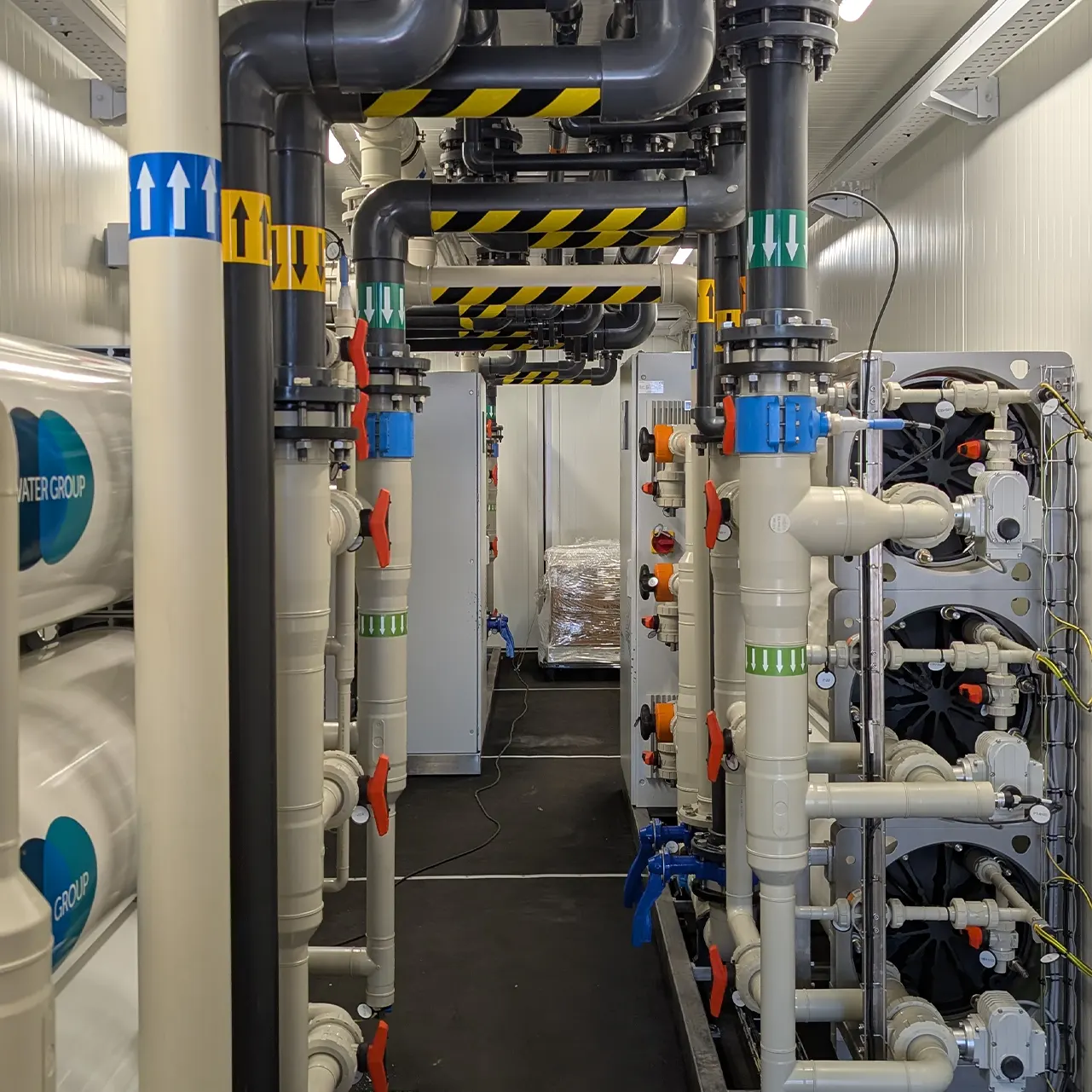
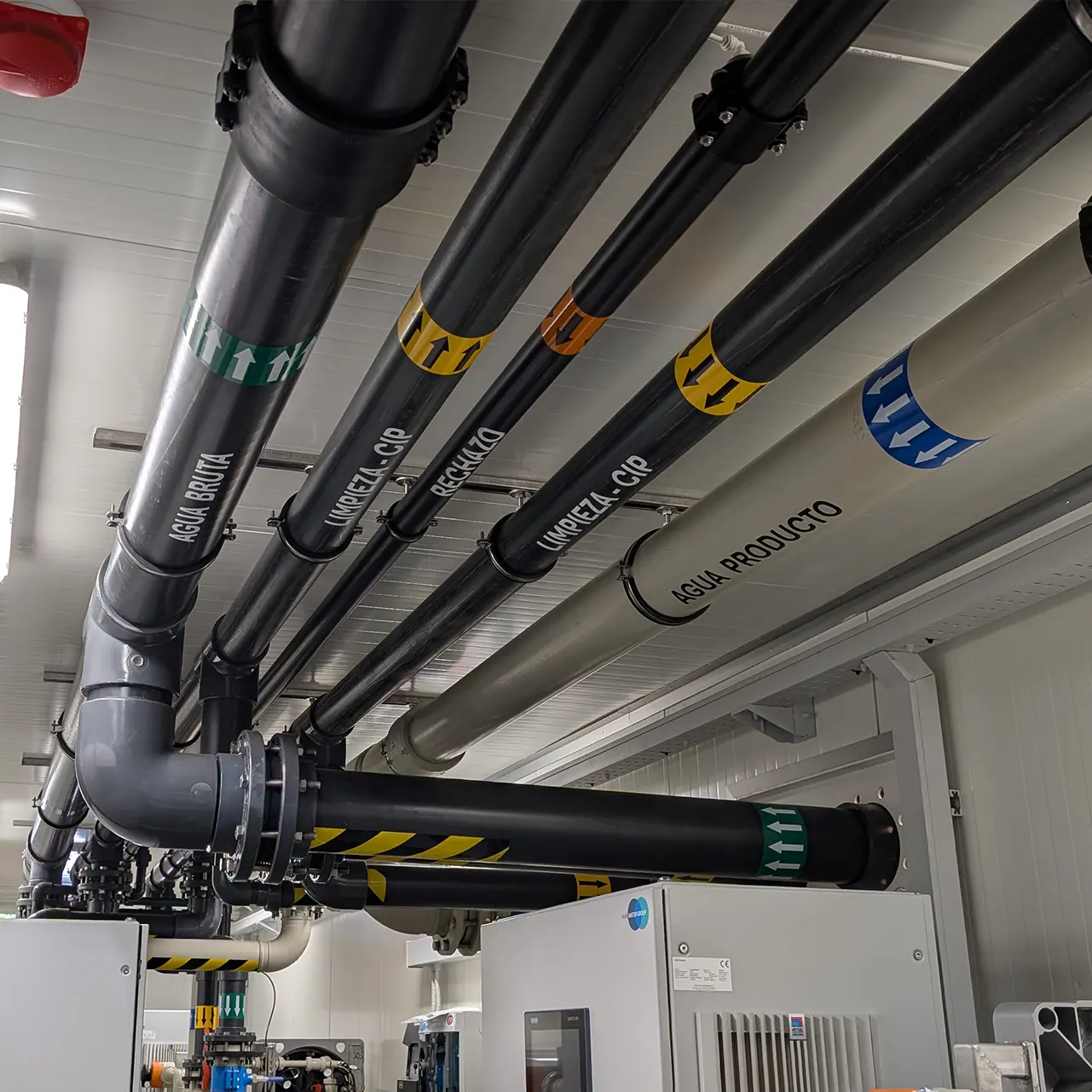
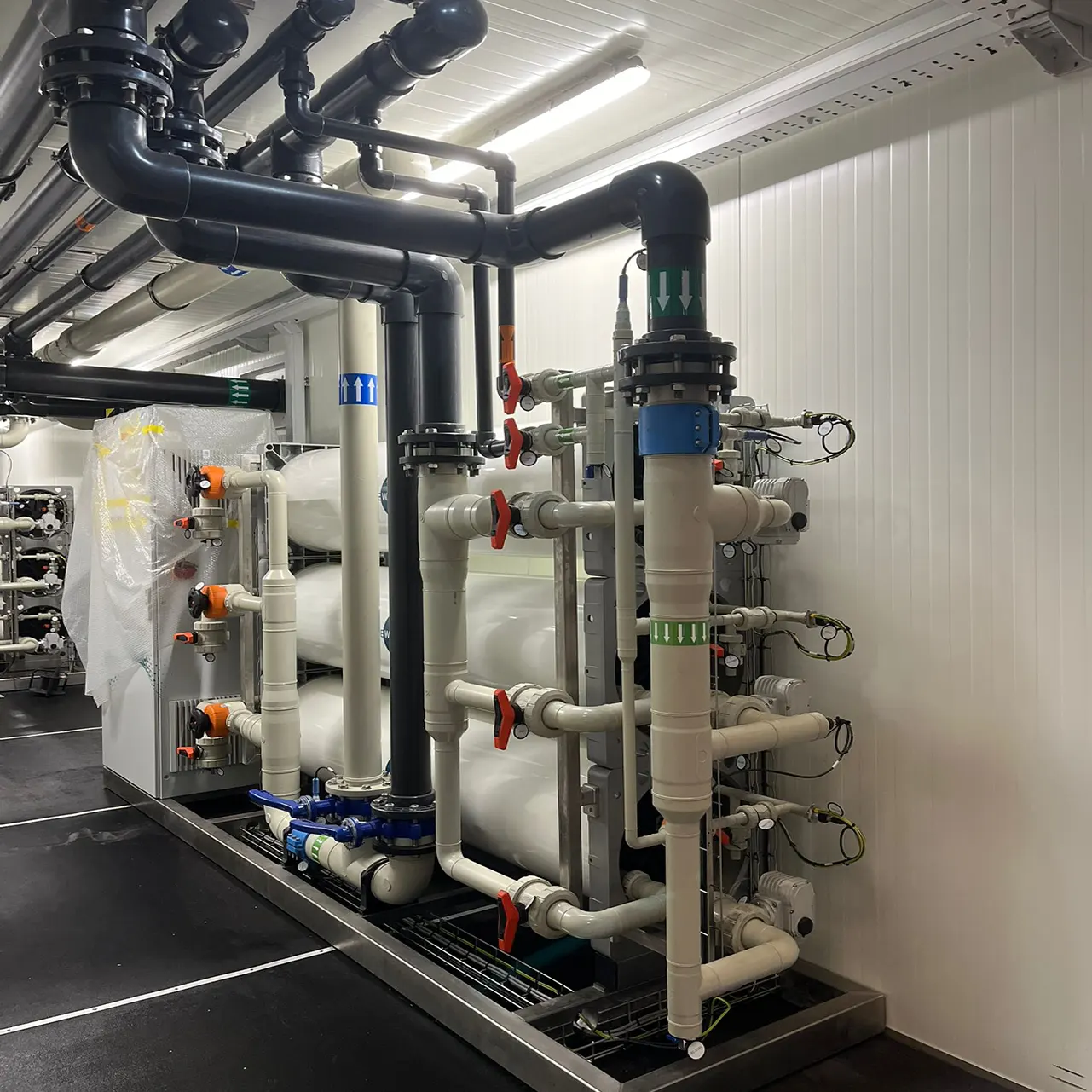
At I’mWATER, we supply compact and customized EDI systems tailored to customer needs, and we containerize solutions in 20 ft or 40 ft containers for plug & play delivery to any destination.
At I’mWATER, we supply compact, customized EDI systems tailored to each customer’s requirements, and we containerize the solutions in 20 ft or 40 ft containers for plug-and-play delivery to any destination.